


Colomba, Tasting Instructions
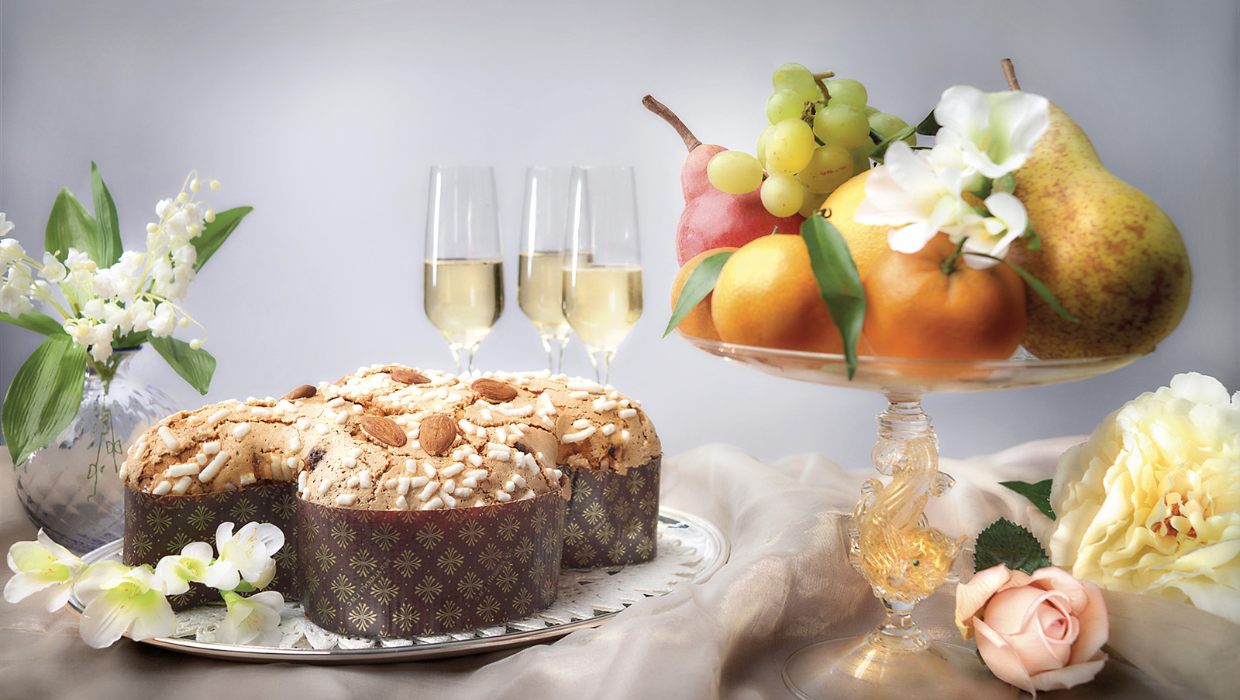
Colomba accompanies the arrival of spring, but today it can be told from a fresh perspective: the art of tasting. Six interpretive keys — ritual, senses, balance, serving, measure, and pairings — help identify aromas, textures, and harmonies, with practical guidance on temperature, slicing, and contemporary pairings.
An invitation to rediscover it as a shared experience, beyond the simple habit of consumption.
There is a cake that announces spring every year even before the calendar does: colomba. Yet beyond recipes and interpretations, there is a theme that is often overlooked and surprisingly relevant today: the ritual of tasting. Because colomba is not simply “eaten”: it is listened to, smelled, read through its texture and balance. And above all, it is shared.
The ritual of sharing: a slice that tells the story of spring
In tasting, one aspect emerges that goes beyond technique: colomba is a cake made to be placed at the center of the table. Its very shape suggests a collective gesture, and the experience is fulfilled through conviviality: it is sliced, passed around, commented on, and becomes a way to compare impressions and memories. In a time when everything moves fast, colomba preserves a rare function: bringing people together.
To describe it through the grammar of taste means restoring dignity to a simple pleasure: not just “eating a cake,” but taking a moment. This is where a great classic becomes contemporary: in its ability to feel familiar and, at the same time, surprising when one truly pays attention to it.
The three-step method: look, break, smell
Effective tasting begins before the mouth. A simple method, accessible to anyone, helps “read” colomba as one would a rich bread or an important baked cake.
- Look: a warm, even color in the dough, an airy but not fragile internal structure, and attention to the surface and glaze (toasting, almonds, sugar granules).
- Break: this gesture reveals the true texture. A portion that opens with elasticity and without crumbling suggests cohesion and softness; if it falls apart into crumbs, it points to a weaker structure or less-than-ideal serving conditions.
- Smell: by bringing the slice closer, the aromatic alphabet becomes clear: butter, vanilla, citrus, light honey, and the toasted notes of the glaze. The nose anticipates flavor and persistence.
Balance is quality: sweetness, richness, freshness, toasting
Colomba is a “rich” cake, but it should not feel heavy. The key is balance, meaning the way four elements come together:
- Sweetness: it should be clear but not overwhelming; excessive sweetness flattens everything and quickly becomes tiring.
- Richness (milky/buttery note): it gives roundness, but works only if it does not cover the other notes.
- Aromatic freshness: often coming from citrus and a “clean” sensation on the palate; this is what makes the experience appealing even with a second bite.
- Toasting and crunch of the glaze: this is the counterpoint, the detail that brings rhythm, variation, and contrast.
Temperature and slicing: two details that determine the experience
Many disappointments come not from the cake itself, but from the way it is served. Two factors radically change its expression on the palate:
- Temperature. If colomba is too cold, its aromatic notes remain closed and its texture feels denser. The ideal serving temperature is around 30°C: at that point it releases its aromas and becomes more “alive.” A quick pass through a warm oven is enough to reactivate the fragrance.
- Slicing. Slicing is not just about appearance: it is about structure. A long serrated knife used with light movements prevents crushing the crumb and breaking the glaze. A serving fork will make the task easier. A well-cut slice feels softer because it preserves air and cohesion.
The measure that lingers: when a cake does not tire the palate
A well-made colomba can be recognized by what remains after the bite: composed sweetness, clear aromas, and a clean finish. Its richness is full yet light, because butter and aromas do not overlap: they alternate. The crumb remains soft and coherent, without crumbling; the citrus opens the palate, the vanilla rounds it out, and the glaze closes with a discreet toasted note that gives rhythm.
The palate does not become saturated: it resets, clears, and invites you to continue. It is a quality that needs no theatrics: it speaks with precision and leaves room. That is why, when the slice is finished, it feels natural to want another — not out of greed, but because of balance.
Contemporary pairings: beyond sweet wine
The reading of colomba’s flavor does not live only in the idea of “dessert with passito.” Today, pairing can serve a more precise purpose: to cleanse, lighten, and sharpen the aromatic notes.
- Black teas and oolong: they accompany toasted notes and almond without overpowering them.
- Citrus or herbal infusions: they enhance freshness and fragrance.
- Filter coffee or light moka coffee: they create a bitter-sweet contrast and cleanse the palate.
- Dry sparkling wines: the bubbles cut through richness and make the slice feel more dynamic.
Sweet wines: a late-harvest wine is excellent, as long as it is not overly sugary, to avoid an excessive “sweet on sweet” effect.
We live in times when everything must astonish us: dishes, words, even desserts. A well-made colomba does the opposite: it does not seek applause, it seeks the second slice. It wins through precision, not excess. The art of tasting is about slowing down and recognizing. If it leaves space on the palate, then it has already spoken: and yes, that is spring.
Loison Pasticceri dal 1938 – Company Profile
Simple roots, genuine ingredients, traditional sweets: these values form the foundation of the Loison family history, four generations of pastry chefs from Costabissara, in the province of Vicenza. It all began in 1938 with grandfather Tranquillo, the first to love the art of baking and to pass it on to his son Alessandro. Together they transformed the family oven into an artisanal business, inaugurating a new laboratory in 1969.
Since 1992, Dario Loison has led the company, in recent years joined by his son Edoardo, keeping the artisanal dimension alive while expanding presence in international markets, always looking to the future. Alongside them, Sonia Pilla, Dario’s wife and art director of Sonia Design, curates the packaging as true works of art: each package is designed to tell a story of beauty, culture and territory.
Every Loison creation is the result of passion, time and research: the cakes come to life from living sourdough, through a slow 72-hour production process with extremely selected ingredients, including recognized excellences such as Slow Food Presidiums.
Loison Pasticceri’s figures tell the story of an artisanal reality with a deeply international spirit: for over 30 years the company has exported worldwide, with 65% of exports reaching more than 75 direct countries; 98% of production is under the Loison brand, synonymous with “value” in the Gourmet segment. With over 600 direct clients worldwide, the company stands out for its short supply chain and its relationship of trust and transparency with customers and suppliers.
 Click here to download the press release